
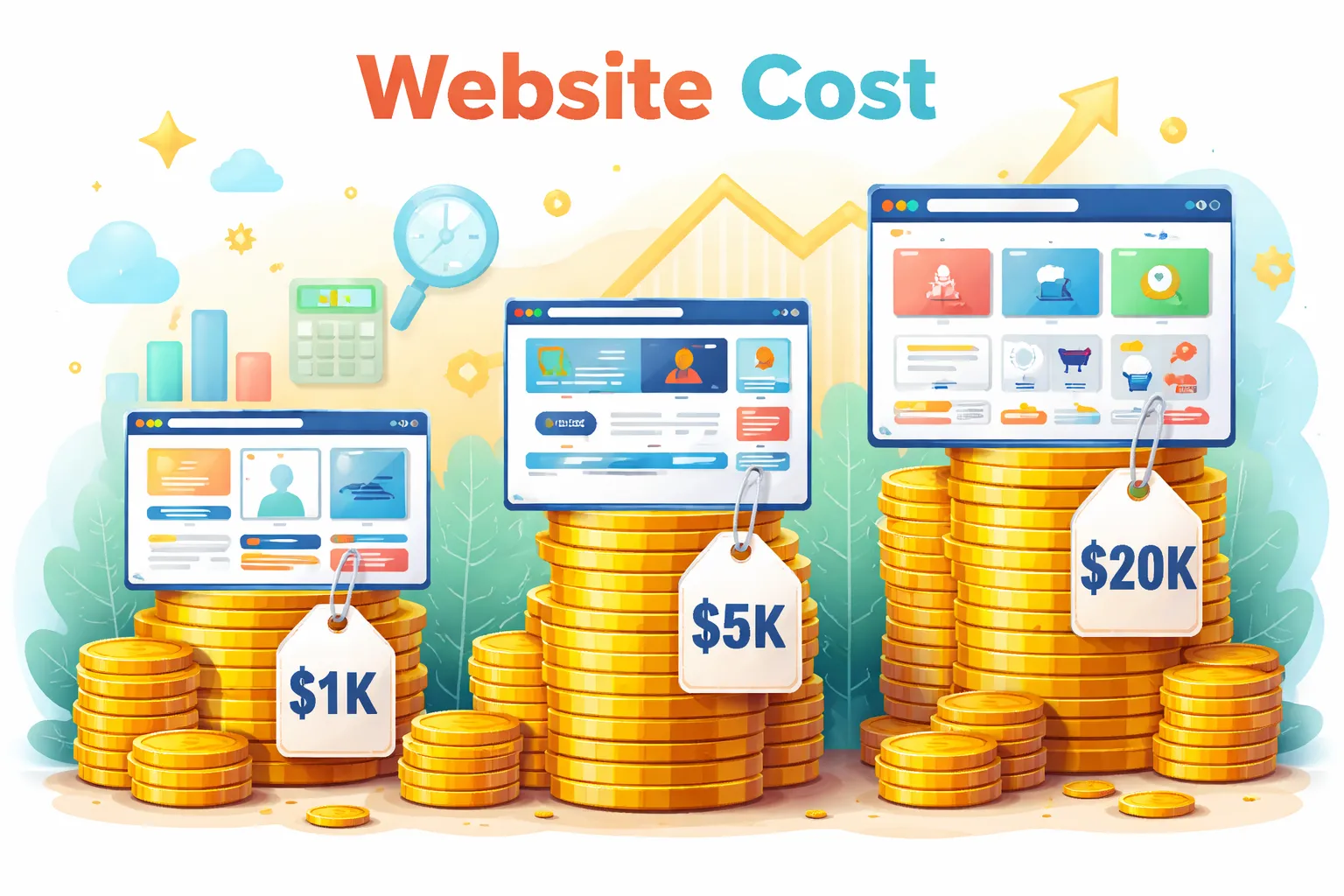
If you’ve ever gotten a quote for a new website, you know how the estimates can vary wildly. One quote might come in at a few thousand dollars, while another for a seemingly similar project is ten times higher. This massive variation isn’t a sign of price gouging (in most cases, at least), it’s a reflection of the deep complexity that lies beneath a modern website’s surface.
Understanding the factors that drive website costs will help you budget accurately and choose the right partner for your project.
Here are four reasons why website prices vary so wildly:
1. Scope and Feature Complexity
The biggest price driver is simply what the website needs to do. A website is not a single product, but a collection of features and integrations.
- Simple Brochure Sites (Lower Cost): A basic informational website, often just a few pages (Home, About, Services, Contact), designed to provide an online presence. These are generally built using simple templates and require minimal custom code.
- E-commerce and Dynamic Sites (Medium to High Cost): Adding the ability to transact—selling products, booking services, or managing inventory—dramatically increases complexity. This requires integrating payment gateways, setting up a secure server, and managing product databases.
- Custom Functionality and Integrations (Highest Cost): This includes anything that requires bespoke code, such as a custom API integration with your existing CRM, a unique user portal, a complex quoting tool, or advanced database searches. Every custom feature adds significant development time.
2. Design and User Experience (UX)
The level of design customization is a huge factor in the final price tag.
- Template-Based Design (Lower Cost): Using a pre-built theme or template from platforms like WordPress or Shopify is the most economical option. The look is limited to the template’s structure, but setup is fast.
- Semi-Custom Design (Medium Cost): Starting with a template but heavily modifying the styles, layouts, and components to better fit your brand. This requires design time but saves on the cost of building every element from scratch.
- Fully Custom Design (Highest Cost): A custom design begins with strategy sessions, wireframing, and creating a unique visual identity tailored to your target audience. This includes creating a full design system, ensuring cross-browser compatibility, and meticulous optimization for mobile and accessibility. This level of detail requires senior-level designers and dedicated UX specialists.
3. The Development Team and Expertise
You’re not just paying for lines of code; you’re paying for the skill, speed, and reliability of the person or team building your site.
- Freelancer (Lowest to Medium Cost): A single developer can be cost-effective, but they typically have limited capacity and may specialize in only one area (like design or backend development).
- Small Agency (Medium Cost): A small team often provides a balance of expertise (design, development, project management) with relatively lower overhead. You benefit from a more structured process and a dedicated point of contact.
- Large Agency (Highest Cost): Large agencies offer full-service capabilities, deep industry expertise, and robust processes. Their higher cost reflects their extensive overhead, multiple layers of specialists, and the security of a well-established company standing behind the work.
4. Post-Launch Requirements and Technology
A website isn’t a one-time expense; the foundation and ongoing needs affect the initial investment.
- Content Management System (CMS): Building on a popular, open-source platform like WordPress is usually more affordable than a custom-built solution that requires specialized maintenance.
- Content Migration: If you have an existing site with hundreds of blog posts or products, the time required to manually or automatically migrate that content into the new structure will be a major cost factor.
- Search Engine Optimization (SEO) and Performance: Implementing advanced SEO strategies, ensuring lightning-fast page speed, and setting up complex analytics tracking all require specialized expertise and add to the initial development price.
- Security and Hosting: Premium, managed hosting and high-level security features necessary for protecting customer data (especially for e-commerce) contribute to the overall setup cost.
As you can see there are lots of different variables that go into getting a website. Feel free to reach out to discuss your options with us anytime. We’re here to help and educate as much as we’re here to make money. We want to make sure the investment you make online is worth it and provides benefits that are larger than the cost.